
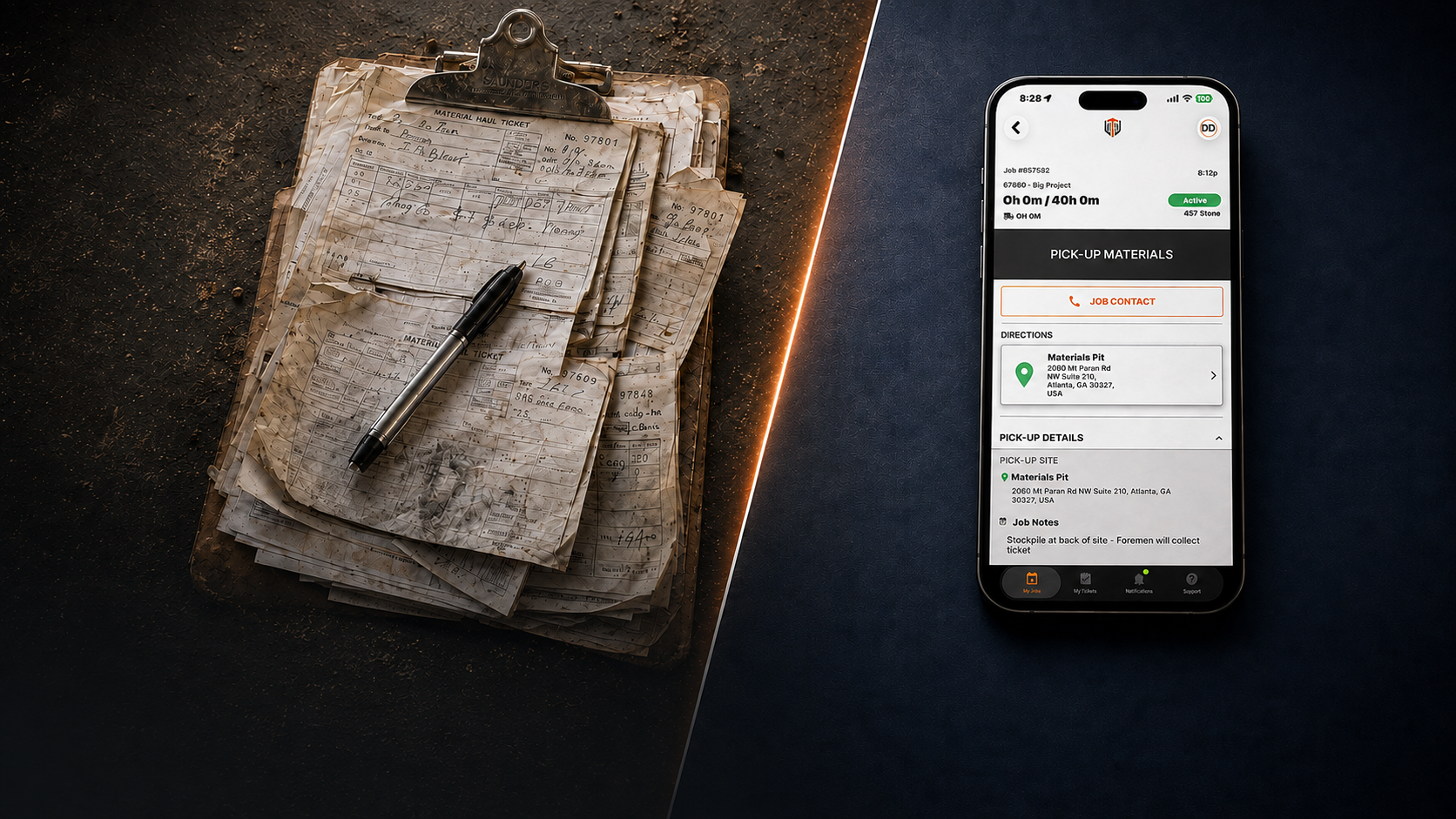
Heavy hauling still runs on phone calls, text messages, and paper tickets. Those tools are familiar and easy to use, but they get harder to manage as an operation grows. That is one reason more contractors, hauling companies, and subhaulers are turning to dump truck apps to manage dispatch, job information, and tickets in one place.
Dispatchers may have company trucks and subhaulers moving across several jobs at once. Start times change, plants back up, jobsites need more material, and drivers get rerouted. Every change creates another call, text, or piece of information someone has to keep straight.
A dump truck app does not need to replace communication between drivers and dispatchers. Its job is to make routine information easier to find and help everyone work from the same plan.
Why Calls and Texts Break Down in Dump Truck Dispatching
Texting works fine when the message is simple. The problem starts when the day changes. A driver may get an address before sunrise, a new start time 30 minutes later, and another update about the drop location after that. Before long, the latest information is spread across several messages and phone calls.
Multiply that across dozens of trucks and several jobs, and mistakes become more likely. Drivers get outdated instructions, tickets go missing, and dispatch spends more time correcting problems.
A connected dump truck dispatch system keeps job details tied to the job. For the driver, that means less digging through text threads, fewer calls back to dispatch, and a clearer answer to a simple question: Where am I going next, and what do I need to know when I get there?
How a Dump Truck App Helps Keep Drivers Moving
For drivers and subhaulers, the value of an app is simple: less time chasing information and more time doing the work.
A trip to the wrong entrance wastes time. Missing a dispatch change can cost another load. Sitting at a plant while dispatch has no idea there is a backup can burn a big part of the day.
TruckIT's Driver App keeps jobs, site information, material details, directions, instructions, updates, and tickets in one place. Drivers do not have to rely on an old text or another phone call to find the latest information.
Dispatchers also gain visibility into truck locations, pickup and drop-off activity, turn times, and delays. The software cannot clear traffic or fix a backed-up plant, but it can make a problem visible while there is still time to adjust.
For a subhauler, that matters. When the truck makes money by working, wasted time hits the bottom line. The value is not simply that dispatch can see where a truck is. The value is using that information to help keep the truck productive.
Digital Tickets Help Protect the Work You Did
For a subhauler, completing the load is only part of the job. You also need a clean record showing the work was done.
Paper tickets can get lost, damaged, or entered incorrectly. Then a billing question comes up days later and everyone is trying to piece together what happened.
Digital ticketing creates a cleaner record. TruckIT keeps ticket information connected to jobs and drivers, while tools like Automatic-PIC can capture information from printed and handwritten tickets. Pickup and drop-off activity can also help document what happened during the day.
That means less paperwork to keep track of and better backup when there is a question about a load, ticket, or delivery. It does not change a customer's payment terms, but it can remove some of the paperwork and uncertainty between completed work and getting paid.
How GPS Tracking Can Help Drivers and Subhaulers
Some drivers are cautious about GPS tracking, and that is understandable. Nobody wants another app just so someone in an office can watch a truck move across a map.
But location data can work both ways. Pickup and drop-off times, routes, turn times, and job activity can help explain delays. If a truck spent an hour waiting at a plant, there is a record of it. If there is a question about a delivery, location and ticket data can help show what happened.
The key is how companies use the technology. A hauling app should help drivers avoid wasted time, reduce unnecessary calls, and create a better record of the work — not simply add another layer of oversight.
The Best Hauling Technology Removes Work
A dump truck driver app will only stick if it makes the job easier. Drivers should not become data-entry clerks.
The better approach is automation. Ticket photos can become digital records. Location data can reduce manual status updates. Dispatch changes can move directly to the driver's assignment. Information already attached to a job should not have to be entered again and again.
TruckIT supports those workflows through its Driver App, digital ticketing, Automatic-PIC, AirTicket, and dispatch tools. The goal is fewer calls, less paperwork, and less information drivers have to keep track of themselves.
The best measure of a hauling app may not be how much time drivers spend using it. It may be how much unnecessary work it removes.
A Better Way to Run the Same Work
Calls and texts are not going away. Neither are experienced dispatchers or the judgment it takes to keep a hauling job moving. Technology is not replacing those things. It is giving routine information a better place to live.
For dispatchers, that means better visibility. For contractors, it means a clearer picture of deliveries. For drivers and subhaulers, the value is more personal: fewer missed changes, fewer unnecessary calls, less paperwork, better records, and more time focused on keeping the truck moving.
That is the real value of connected hauling. It is not another app for the sake of technology. It is a practical productivity tool that allows the whole organization to do more with less work and fewer mistakes.
Frequently Asked Questions About Dump Truck Apps
What does a dump truck app do?
A dump truck app can connect dispatch information, job details, directions, truck activity, and tickets in one place. Depending on the platform, drivers can receive assignments and updates while dispatchers monitor jobs and truck activity.
How can a dump truck app help drivers and subhaulers?
A good app should reduce work, not add to it. It can help drivers spend less time searching through texts, calling dispatch for updates, keeping track of paper tickets, and sorting out questions about completed loads.
Can dump truck apps replace paper tickets?
Some hauling platforms support digital ticketing or allow drivers to capture paper tickets from their phones. Replacing printed ticket pads with digital tickets can amount to a substantial monthly savings in printing costs when you’re paying to print the problem. TruckIT supports digital ticket workflows through tools such as Automatic-PIC and AirTicket, helping keep ticket information tied to the job and available for reconciliation.
Author:
Dan Hall
curious to see what's
Under the hood?
Request a demo below... let us answer your questions and show you how TruckIT can support your team and drive performance.